
The results from the US midterms couldn’t be clearer: “The Democrats have won the Senate and the House in US midterm elections, taking control of Congress for the rest of Donald Trump’s presidency.”
A blue wave has wiped out the President’s control of Congress, as the results show below (accurate as of 15 November 2026):
Senate results, Midterms 2026
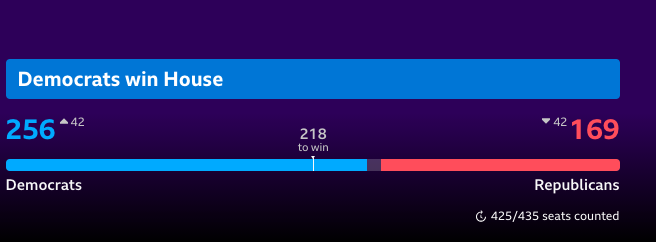
House results, Midterms 2026
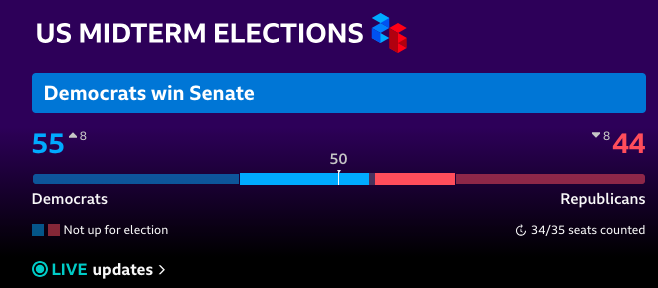
Source: BBC
Democrats also took control of far more states than expected.
However, that won’t affect the war currently being waged against Iran, the cost of petrol at the pump, international trade, or trade finance.
This article isn’t a political commentary. It’s an economic one, and it’s on a topic that is of keen interest to our entire sector.
Impact of Iran War on the global economy, international trade, and trade finance
Whether you’re an oil and gas giant, a bank, an institutional investor, or an SME, the war with Iran has negatively impacted many of the things we once thought were certain.
Like the passage of oil and gas through one of the world’s most important transport routes, the Strait of Hormuz (around 20% of global petroleum).
As the US Energy Information Administration (EIA) stated before the war started: “The strait is deep enough and wide enough to handle the world’s largest crude oil tankers, and it is one of the world’s most important oil chokepoints. Large volumes of oil flow through the strait, and very few alternative options exist to move oil out of the strait if it is closed.”
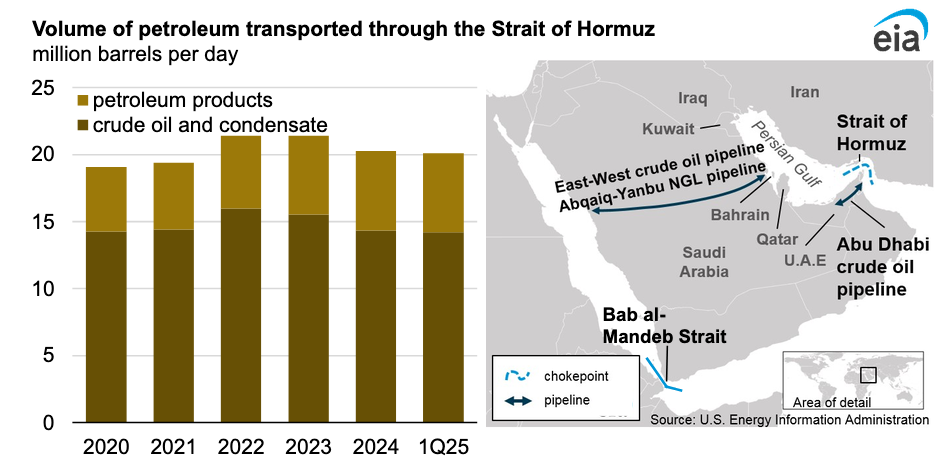
Hence why the price of crude oil jumped even before the war started, “from $69 per barrel (b) on June 12 to $74/b on June 13 [2025]”, purely out of fear that the Strait could be closed.
Sadly, that fear was realized. The war started. Beginning with US-Israeli strikes on Iran on 28 February 2026. The strait closed. Then opened, closed, and right now is kind-of open, with traffic increasing again.
For many in the region, and global oil, gas, and freight shipping companies that would normally traverse the Strait, the “relief is real, but fragile.”

Image: Vessels at the Strait of Hormuz, as seen from Musandam, Oman, October 19, 2026. REUTERS/Stringer/File Photo.
Beyond the immediate geopolitical impacts, the war has caused or contributed to the following problems:
Shipping, Insurance and the Cost of Moving Goods
The most immediate commercial effect was on the cost and availability of insurance cover. This is when the war first broke out. War-risk insurance premiums for vessels operating in the region spiked, and in some cases cover was withdrawn altogether.
Many carriers responded by rerouting or adding conflict surcharges, in some cases exceeding $1,500 per container on key routes. Air freight was also affected, with severe restrictions and detours across Middle Eastern airspace.
Energy Prices: Shock, Then Partial Recovery
Energy markets reacted sharply. Brent crude and natural gas prices surged after the outbreak, with oil peaking at around $126 a barrel earlier in 2026.
The picture has since eased. In November 2026, the International Energy Agency (IEE) reported that global oil supply had returned to surplus for the first time since the war began. Production (or at least, the volume of production being delivered), finally exceeds demand by nearly 2 million barrels a day as exports from non-Iranian Gulf producers have improved.
Brent oil prices have fallen to roughly $95 a barrel. That is well below the peak but still elevated. Suggesting that markets are rebalancing rather than returning to normal.
Food Security and Fertilizers
A large share of the world’s crop nutrients and fertilizers also moves through the Persian Gulf. This unexpected and unplanned disruption negatively hit global agriculture.
Supply interruptions raised input and food costs. The burden fell hardest on developing economies and net food importers, which have the least room to absorb price shocks.
In many Western countries, we are already struggling with a “cost of living crisis”, so rising fuel and food prices have undoubtedly hurt the economy.
Negative Implications for Trade Finance
All of these disruptions have a direct negative impact on trade finance, which depends on predictable transit times, insurable cargo, and stable commodity values.
Because the war started earlier in the year, the full financial impact may not be calculable until next year. However, we can surmise the following:
- Insurance and documentation: Where war-risk cover is too expensive, shipments may not satisfy the insurance requirements in letters of credit, making it harder for banks to finance them. This increases trade finance costs for SMEs and can reduce profits for banks, investors, and non-bank funders.
- Longer transit times and working capital timescales: Rerouting lengthens voyages, extending financing periods and increasing working-capital needs for importers and exporters.
- Collateral and pricing volatility: Sharp swings in oil, gas and fertilizer prices change the value of goods that secure financing and complicate pricing and margin calls on commodity-backed facilities.
- Cost of credit for vulnerable buyers: Net food importers and other developing-economy buyers face higher import bills at the same time as tighter, more expensive financing.
- Compliance burden: Banks face closer scrutiny of counterparties, insurance, financing arrangements, vessels and routes in the region.
It also, almost certainly, contributed to how the public voted in the midterms.
Change and an end to the war are needed.

Could Democrat Congressional Control End the War with Iran?
From an economic and financial perspective, an end to the war — peace with Iran and the Strait of Hormuz reopening without restrictions — is crucial.
Alongside many other goals that the average voter and the finance industry care about, can the Democrats deliver this?
Yes, but it’s complicated.
Until the new House and Senate are sworn in on 3 January 2027, Republicans still have legislative control of both chambers of Congress.
Also, despite this massive victory, they still won’t possess a supermajority in both the House and Senate. Therefore, they won’t be able to override any presidential vetoes.
However, because the war is so unpopular, a presidential veto of any Democrat legislation to end the war could backfire.
Various legislative options exist for Democrats in Congress once they’re sworn in:
- Using the continuing resolution on 11 December 2026 to restrict further war funding. But that does risk contributing to a government shutdown, which is never a good look before Christmas.
- Deploy various funding legislation once they’re sworn in to prevent any more funds from being used to fight Iran in any way. Probably the easiest to do and most likely to be successful.
- Use the War Powers Resolution of 1973 to forcibly withdraw US troops and military assets from the region.
- Alongside the above, there will be serious investigations into Defense Secretary Pete Hegseth and other administration figures responsible for the war and other acts carried out by the US military in the Gulf and other regions of the world.
Whichever mechanism or series of approaches is used, it’s likely that the Democrats will put an end to this war against Iran. The Strait will re-open, and the impact on petrol prices, global trade, and trade finance will be positive.
💡Download our exclusive eBook: State of Trade Finance 2026 (Looking Ahead to 2027)
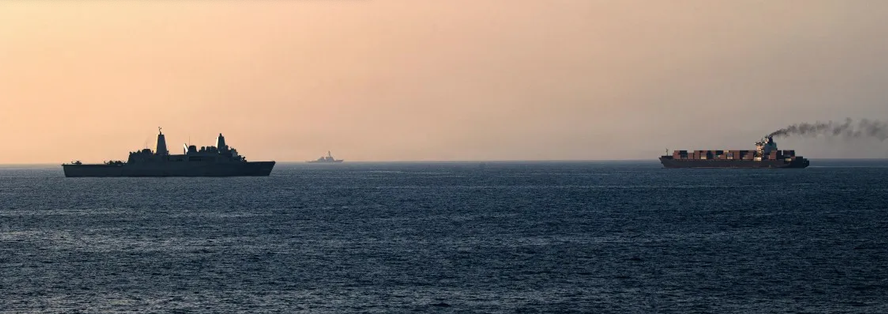
Cover image: Image credit: US Navy; source.
See what the LiquidX team has been publishing recently:
How Do Tariff Refunds Impact the Trade Finance Sector?
State of the Letters of Credit (LC) market in 2026
How Can Banks, FIs & Asset Managers Perform Due Diligence on AI Products, Tools, and Integrations?
Data Transparency and the Value of Clear Data Visibility FIs & Asset Managers Can Act On
Banks and asset managers: To request a demo of our end-to-end trade finance software solutions, click here.