
After the scandals and surprises of 2025, does this opening paragraph sound too familiar in the trade finance and private credit sector?
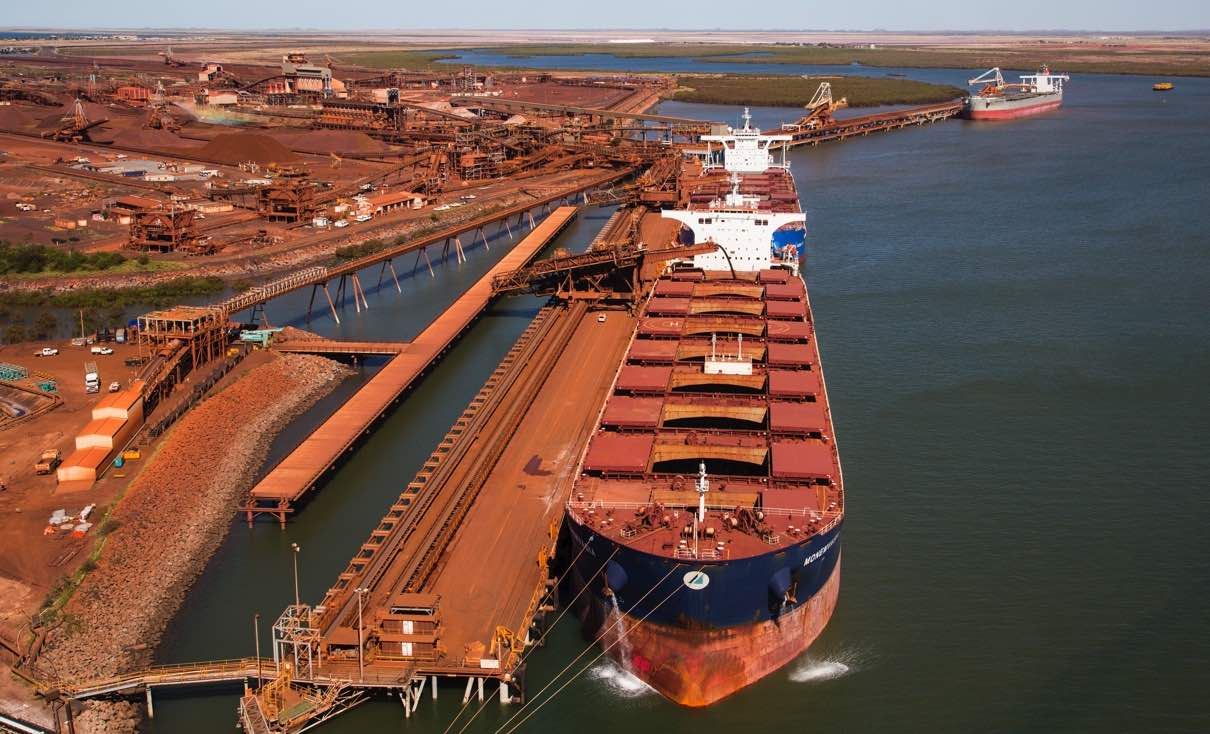
“Iron ore trader Radiant World has been at the center of a widening crisis since banks and counterparties began distancing themselves over concerns it may have used invalid documents to raise financing.”
Before Radiant World, it was First Brands Group (FBG), Tricolor, and Cantor Group, as we discuss more in this article.
Now it’s Radiant World, a company founded in the early 2000s, and supposedly one of the largest iron ore traders in the world, “handling more than 80 million metric tons of the steelmaking raw material annually.”
Radiant World claims to have over 100 staff and offices in 7 countries, including its headquarters in Singapore.
According to its last financial statements, the company generated $9.6 billion in revenues for the 2024-45 financial year.
However, as you’ve likely seen, there are potentially massive discrepancies between what the company claims and what it’s being sued for.
What is Alleged Against Radiant World?
Things aren’t looking so radiant over in Radiant World. There are several lawsuits against the company.
Key Takeaways
- Multiple lawsuits: Radiant World, an iron ore trader, faces several legal actions, many playing out in courts with international reach, including London.
- London freezing order: Jefferies-owned LAM Trade Finance Group II won a worldwide freezing order against Radiant World and subsidiary Sapphire Minmetals in a roughly $500 million fraud claim. Its lawyers say audited accounts showed over $200 million in cash, but the company may hold only $10,000. The judge said debit notes were used to “paper over the cracks.”
- Swiss complaint: US fund Mariner Atlantic filed a criminal complaint in Switzerland over about $48.6 million lent in June and backed by trade receivables.
- Singapore case (most serious): After a fraud case brought by Mizuho Bank, a Singapore court appointed KPMG as interim judicial managers. Mizuho had issued $100 million in credit secured by invoices that Glencore later confirmed were invalid.
- Other creditors: Intesa Sanpaolo and Deutsche Bank are also seeking repayment of credit allegedly backed by fraudulent invoices and debit notes.
- Company’s response: Radiant World is now operating under KPMG’s Singapore-appointed judicial oversight. Right now, they deny all wrongdoing and have countersued Glencore for $2 billion in damages.
Because iron ore and other commodities trade globally, with much of the activity taking place in one of the world’s biggest financial centers, London, much of this will play out in courts with international jurisdiction.
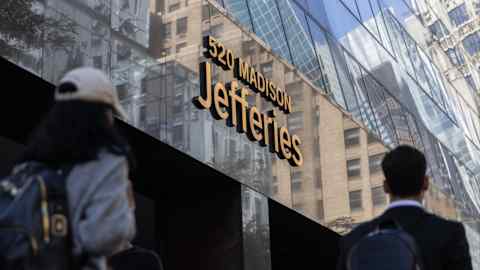
U.S. bank and Jefferies-owned LAM Trade Finance Group II successfully obtained a worldwide freezing order in London’s High Court against Radiant World and its subsidiary, Sapphire Minmetals.
Court documents describe this as “a substantial, complex, $500 million international fraud claim.”
At a hearing in London, defending the international freezing order, lawyers for LAM Trade Finance Group II, said: “The audited financial statements refer to cash balances of over $200 million whereas (the statement) says that Radiant World holds only $10,000 in cash.”
“It appears that the defendants used debit notes to paper over the cracks, as it is put by the claimant, for as long as they could, and it is characterized that ‘the well has now run dry’,” Judge Simon Bryan said when he made the freezing order.
Another criminal complaint was made in Switzerland against Radiant World by New York-based fund Mariner Atlantic Multi-Strategy LLC.
According to Reuters: “The complaint is related to about $48.6 million that Mariner says it lent to Radiant World in late June that was underpinned by trade receivables.”
Neither of those is the most serious case.
In late September, a Singapore High Court judge appointed KPMG as interim judicial managers following a successful fraud case brought by creditor Mizuho Bank.
Mizuho had issued $100 million worth of credit “that was secured by invoices that a counterparty to the iron ore trader, London-listed Glencore,” later confirmed were invalid.
Two banks, Intesa Sanpaolo and Deutsche Bank, are also pursuing Radiant World to repay credit that was also underpinned by fraudulent invoices and debit notes.
Radiant World is still operating as a business, though KPMG-based interim judicial managers oversee operations (which could be replaced by a full judicial manager if deemed necessary), and it has countersued Glencore.
The company “rejects, in the clearest terms, the allegations of wrongdoing that have been made against it and the companies associated with it”, and is claiming $2bn of damages against Glencore.
What Are The Lessons for Trade Finance?
At the heart of all of these cases are allegations that Radiant World:
- Used fraudulent invoices and debit notes to falsify money being paid or owing to the company;
- Was able to bypass or deceive various KYC and other fraud detection systems in some of the world’s largest banks and funds;
- Seemingly successfully took out multi-million-dollar lines of credit (8, 9 figures, etc.) on the back of these fraudulent invoices, debit notes, and supporting documents.
Find out what we were already doing about these challenges and risks long before any of these cases: Data Transparency and the Value of Clear Data Visibility FIs & Asset Managers Can Act On
Fraud Enhancement Solutions: Key Takeaways
- Control the flow of financing: Lockboxes give funders confidence that receivables are collected, though they take longer to set up than commingled structures.
- Bring buyers into the loop: Sold-invoice notifications and approval workflows let buyers flag invoices they don’t recognize, provided they actually engage.
- Cut out manual input: Direct ERP connectivity reduces the risk of invoice tampering, but integration can be a heavy lift for customers.
- Let technology check the documents: AI-driven validation compares invoices, purchase orders, contracts, and bills of lading to confirm everything matches before financing.
- Keep watching after funding: Post-trade anomaly monitoring catches duplicate financing requests, unusual values, and odd shipment routes as tactics evolve.
We expand upon those points in the rest of this article.

Banks and asset managers: To request a demo of our end-to-end trade finance software solutions, click here.
Now, let’s look at what we are doing to safeguard clients and prevent fraud on this scale in the future (noting that LiquidX and our clients are unaffected by what happened to clients, creditors, and invested counterparties in RW and associated companies).
6 Ways to Enhance Fraud Prevention in Trade Finance
Alongside and integral to numerous enhancements and improvements we’ve been making since 2025, we have reviewed and are testing the following enhanced fraud prevention solutions.
1. Use a lockbox for higher-risk counterparties
A lockbox routes buyer payments into a controlled account, so funders can be confident they’re collecting receivables. A lockbox is especially valuable when onboarding riskier clients, particularly with a deposit account control agreement (DACA) in place.
However, there are pros and cons to consider:
- Banking and legal setup can take 2+ months to implement;
- Repayment processing is more complex;
- Getting buyers to change remittance instructions can take months of follow-up.
Commingled structures are faster and lighter, which suits lower-risk relationships, but they give far less visibility over cash flows.
2. Notify buyers when invoices are sold
When an invoice is sold or is approaching its due date, the buyer receives a notification stating the full amount owed.
Buyers can then escalate any invoice they don’t recognize. Putting the party best placed to spot a fraudulent or faked invoice directly in the loop.
The main challenge is behavior-based: how consistently will buyers actually read and validate these notifications?
This control mechanism is only as strong as buyer engagement.
3. Implement a buyer onboarding and approval workflow
Going a step further, counterparties in any trade finance deal (e.g., banks, funds, AMs, etc.) can use a platform like LiquidX, review the invoices available, accept them, and submit them for funding. Every action is recorded, creating a full audit trail.
One of the advantages of the LiquidX platform is that its technology is input-agnostic. It integrates and works alongside other software, and can ingest invoices and other financial documents and data in any format.
You don’t need to build custom software. Start using our off-the-shelf solutions as part of your trade finance program, and enhance your trade finance program’s fraud prevention.
Banks and asset managers: To request a demo of our end-to-end trade finance software solutions, click here.

4. Connect directly to the ERP (or a lightweight alternative for organizations not using ERPs)
When invoices are generated in the seller’s ERP system and pulled straight into the financing platform, manual input disappears. Unfortunately, that significantly reduces the risk of tampering and invoice fraud.
At the same time, the cost is an integration effort. Customers run different ERP systems with non-standard requirements. This could mean every connection requires custom development and extra work for the customer.
Also, some customers don’t use an ERP at all, making this approach invalid.
In this case, an ERP connection alternative exists. Lighter implementations can use SFTP to send asset details onward, which our digitization technology supports.
Although this is slightly less secure than direct ERP connectivity, it reduces the risk of manual manipulation of asset details by automating the transfer between systems.
5. Validate and verify documents automatically
As we’ve seen with the Radiant World case, (alleged) fraud can hide in the gaps between documents.
Digitization and AI can ingest invoices, purchase orders, sales contracts, and bills of lading, extract the data, and link it all to the invoice. A comparative analysis then checks that the details agree, including:
- Finance counterparties
- Dates and shipment references
- Goods, quantities and prices
- Load and discharge ports
- Anomalies and signatures
- Whether the same data appears in other invoices and documents
- Whether the same or similar documents appear in other finance agreements
The outcome determines whether an invoice passes validation and can be sent for financing, with documented override thresholds and reverification when documents change.
Deep OCR can even extract text from low-visibility or watermarked documents and normalize data from any format or channel.
6. Monitor for anomalies after the trade
Controls shouldn’t stop at funding. Post-trade monitoring looks for red flags such as duplicate financing requests, abnormal invoice values, and unusual shipment routes. Making sure that evolving tactics are caught as they emerge.
Enhanced Fraud Prevention: Looking ahead
The longer-term goal is to extend this approach to risk generally, with AI-assisted validation and decision-making, pre-trade compliance checks, and smart workflows.
Third-party data such as OFAC sanctions lists, credit ratings, public registries, and compliance screenings could further widen coverage. The aim is to reduce blind spots across invoice validation, double pledging, commingled collateral, and sanctions exposure.
See what the LiquidX team has been doing recently:
Are Banks Backing Off From Digital Trade Finance Adoption?
Why are Digital Bills of Exchange the future for SMEs in a fragmented trade finance market?
Impact of Private Credit Stress on Trade Finance
Data Transparency and the Value of Clear Data Visibility FIs & Asset Managers Can Act On
Banks and asset managers: To request a demo of our end-to-end trade finance software solutions, click here.