
In 2026, we predict the trade finance sector will continue to evolve, driven by economic headwinds, technological innovation, and evolving capital strategies.
While tariffs and inflationary pressures will constrain global growth, the sector will see fundamental shifts in how institutions assess risk, seize opportunities, and invest in infrastructure.
Here are our 10 research and insight-backed predictions for trade finance in 2026.
1. Global growth is showing signs of a fragile recovery and greater resilience than expected
The global economy is showing unexpected resilience despite tariffs (which have already cost the world $1.2 trillion in 2025), supported by heavy investment in artificial intelligence, the OECD reports.
A retroactive 2025 growth forecast for the Eurozone is up 1.3%, and up 1.2% for the UK, and the US is also up 2%.
Global growth is projected to ease to 2.9% in 2026 (down from 3.3% in 2024), before a slight rebound to 3.1% in 2027. However, the outlook remains “fragile”, as further trade barriers could severely disrupt supply chains and global output, the OECD warned.
2. An increase in business insolvencies
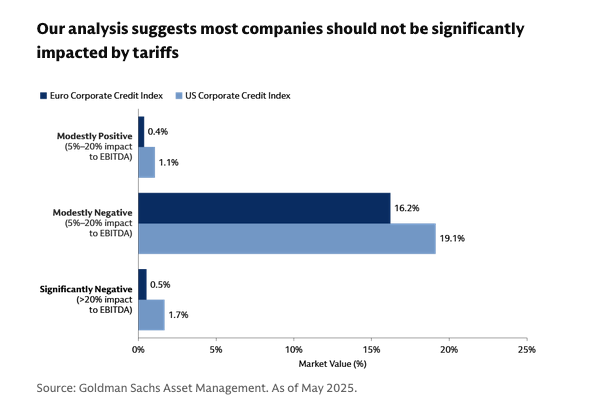
Despite this tentative positive development, Allianz Trade forecasts a 5% increase in global business insolvencies in 2026, which could threaten as many as 2.1 million jobs worldwide.
If this happens, this could force trade finance providers (particularly FIs) to reimagine their risk assessment frameworks. Traditional credit models will prove insufficient as businesses navigate overlapping challenges:
- Supply chain disruptions
- Higher interest rates
- Demand volatility.
Financial Institutions that invest in real-time monitoring and predictive analytics will gain a competitive advantage in identifying viable counterparties amid potentially more market distress.
3. Banks and asset managers will explore previously untapped growth opportunities
With traditional markets showing limited growth potential (particularly the US and Europe), banks and asset managers will expand their geographic and sector-based footprint. The focus of trade finance programs will shift toward previously untapped opportunities like:
- Emerging market SMEs
- More specialized industry verticals
- Non-traditional trade corridors, nearshoring, and offshoring industrials.
This expansion requires more than the desire to explore new regions and sectors; it demands localized expertise, cultural fluency, and partnership networks that can navigate complex regulatory environments across multiple jurisdictions.
4. Bridging the $2.5 trillion trade finance gap
The persistent $2.5 trillion trade finance gap in Africa, Asia, China, India, and the United Arab Emirates (UAE) represents both a challenge and an opportunity.
In 2026, bridging this divide will move from an aspirational goal to a strategic drive. Trade finance FinTech SaaS partnerships will prove essential in efficiently distributing capital to underserved markets.
Financial institutions that crack the code on serving smaller transactions economically — through automation, standardization, and technology-enabled scale — will unlock substantial new revenue streams while expanding financial inclusion.
5. Regional banks will explore opportunities further afield
To combat stagnant growth in home markets, regional banks could explore higher-growth trade finance opportunities. Some will retreat, viewing international trade as too complex or capital-intensive. Those that seize the moment, leveraging specialized knowledge and nimble operations, will capture market share.
The winners will be those who partner with technology platforms like LiquidX rather than building capabilities in-house, creating a more interconnected and interdependent banking ecosystem.
6. Further asset manager growth in 2026
Asset managers will increasingly position themselves as market-leading players in trade finance, capitalizing on their inherent advantages: portfolio diversification capabilities, sophisticated risk management, and flexibility in capital deployment.
Unlike banks constrained by regulatory capital requirements and legacy systems, asset managers can move quickly into attractive segments, structure innovative products, and offer competitive pricing.

7. AI playing more of a role in supply chain finance
AI integration within SCF and other trade finance systems is no longer a nice-to-have; it’s mission-critical.
As our CRO, Dominic Capolongo, said in Finance Derivative:
“The key advantage lies in AI’s pattern recognition capabilities. Rather than relying on fixed rules, machine learning models can identify complex relationships between different data elements.”
“When a buyer truncates an invoice reference or applies an unexpected discount, AI can still identify the correct match by recognising patterns in the remaining data points. This capability proves invaluable when reconciling transactions affected by tariff-related adjustments or partial payments.”
Continuing with this theme, how can AI further support and enhance the supply chain finance sector? In another article, Dominic said in AI in Business:
“Sharper, more sudden fluctuations are being sparked not by the things we know are coming, but by the latest news headlines – particularly around the rapidly changing U.S. trade policy – and this unpredictability is triggering knee-jerk reactions across the market.”
“While market volatility shows no sign of settling, AI, specifically ML, does offer a solution in terms of how financial institutions handle the chaos.

8. Basel III rules won’t impact the sector as negatively as many expect
As we’ve noted previously, trade finance isn’t overly affected by Basel III Endgame rules directly.
As the IMF said, the 37 Tier-1 banks (with over $100 billion on their balance sheets) can monetize trade finance without worrying about Basel III because trade finance is “low-risk, highly collateralized . . . with a very small loss record.”
With default rates under 0.25%, trade finance products offer some protection against Basel III rules, making them an even more attractive asset class in these uncertain times.
However, because banks face more stringent capital requirements, this might raise the cost of trade finance for SMEs. At the same time, this gives asset managers another avenue into the market. Taking a more active role in the market, especially for private credit providers.
Despite fears earlier in the year, we’ve not seen any reduction in appetite from banks for trade finance in 2025, and we are monitoring this closely as we go into 2026.
9. Trade finance will become more self-serve
Trade finance will become increasingly self-serve in 2026, with platforms offering flexible, modular setup solutions that dramatically reduce onboarding friction.
What once required months of relationship building, documentation, and system integration will condense into weeks or even days. This democratization will enable mid-sized banks, asset managers, and corporate treasuries to scale their trade finance activities rapidly.
Making it easier for new organizations to get into new markets and products without the massive upfront investment. Creating a more liquid, accessible market with lower barriers to entry.
10. A deeper financialization of trade
As global value chains continue evolving — becoming more regionalized, diversified, and technology-enabled — the financialization of trade will deepen. In particular, trade finance FinTechs will help clients and partners become more transparent, robust, and secure.
As a result, trade finance will become more deeply embedded in supply chain operations, with financial products designed for specific value chain segments rather than generic trade transactions.
Producing a convergence that will blur lines between trade finance, supply chain finance, and working capital management, creating integrated solutions that optimize both physical and financial flows simultaneously.
Final thought as we look towards 2026
“In 2026, the trade finance sector and organizations that participate in it will be defined by adaptation and innovation amid economic challenges.”
“While growth may be constrained, the year will lay groundwork for a more efficient, accessible, and technologically sophisticated market — one better equipped to serve the complex, interconnected global economy of the future.”
— Dominic Capolongo, LiquidX’s CRO.
How LiquidX supports various organizations in the trade finance sector
How Asset Managers Are Using LiquidX to Scale Trade Finance Operations & Profits
Why Global Banks Rely on LiquidX for Trade Finance Software
Regional Banks Rely on LiquidX for Trade Finance Software
Whether you need one module or an end-to-end solution, we have you covered, and we can have you up and running in weeks, not months:
- Trade: Automatically digitizes assets in the front office.
- TradeHub: Manages portfolio risk with ease.
- TradeOps: Make significant back office savings; up to 50% savings compared to in-house back office software.
- InMatch: Can handle reconciliation challenges for asset managers.
- Trade finance software that can take in any invoice format (e.g., XLSX, PDF, etc.), and use that as workable data downstream across the trade lifecycle.
- Includes the advantages of a deep partnership with Broadridge (NYSE: BR), a trusted global fintech leader. Broadridge is LiquidX’s largest committed investor and strategic operational services provider for payment processing, account reconciliation, and global operational scalability.
Banks and asset managers: To request a demo of our trade finance distribution solutions, click here.

Final Chance: Share Your Views & Expertise for our eBook: “State of Trade Finance 2026”
It’s the final chance to share your thoughts, views, and expert opinions on the overall state of trade finance.
Once the survey is complete, and enough responses gathered ⏤ we expect by October ⏤ we will start compiling our exclusive eBook, which we’ll launch in January 2026: “State of Trade Finance 2026: Past Learnings, Forward Thinking.”
Because we are a proud member of the Global Trade Review (GTR), and attended and were a sponsor for this year’s London event (GTR UK), this survey will also go out to 2,000 GTR members.
Take 5 minutes to complete our survey, and we’ll send you the finished eBook before it’s published. Your quotes will be amplified via our PR, social media, and email marketing channels
Join the conversation that’s defining the future of trade finance – your expertise is exactly what the industry needs to navigate unprecedented change.
Banks and asset managers: To request a demo of our trade finance distribution solutions, click here.