

Based on over $120 billion in trade finance transactions processed since 2016, including over $90 billion between 2021 and 2025, reveals a sustained expansion in both total trade volumes and asset manager participation, highlighting the sector’s evolution from a niche alternative investment to a core institutional allocation.
LiquidX’s total annual trade volumes reached $27.2 billion in 2025, up from $25.1 billion in 2024, representing an 8% year-over-year increase.
Momentum accelerated in the first half of 2025, with volumes rising 14% year over year, pointing to continued growth despite broader market volatility.
Asset managers now account for approximately 26% of total trade finance volume, up significantly from their share in 2021.
“As asset managers, working capital finance offers short-duration, low-volatility exposure with attractive diversification,” said Guy Brooks, Managing Director, Working Capital Finance, Pemberton Asset Management.
“The global trade finance gap exceeds $2.5 trillion, driven by bank retrenchment and new regulatory constraints.
With working capital finance, typical maturities range from 90 to 180 days, with annualized returns between 2% and 5%+ over base, and historic market data showing default rates below 0.5%. This makes it a compelling alternative to traditional fixed income, especially in volatile or rising-rate environments.”
This steady increase in asset manager volume reflects growing institutional confidence in trade finance as a source of diversified yield, supported by short durations, self-liquidating structures, and improving data transparency.
We anticipate this trend to extend globally, especially in Europe, where the company’s personnel are based in the European Union (EU), and in London, UK, in partnership with Broadridge Financial Solutions.
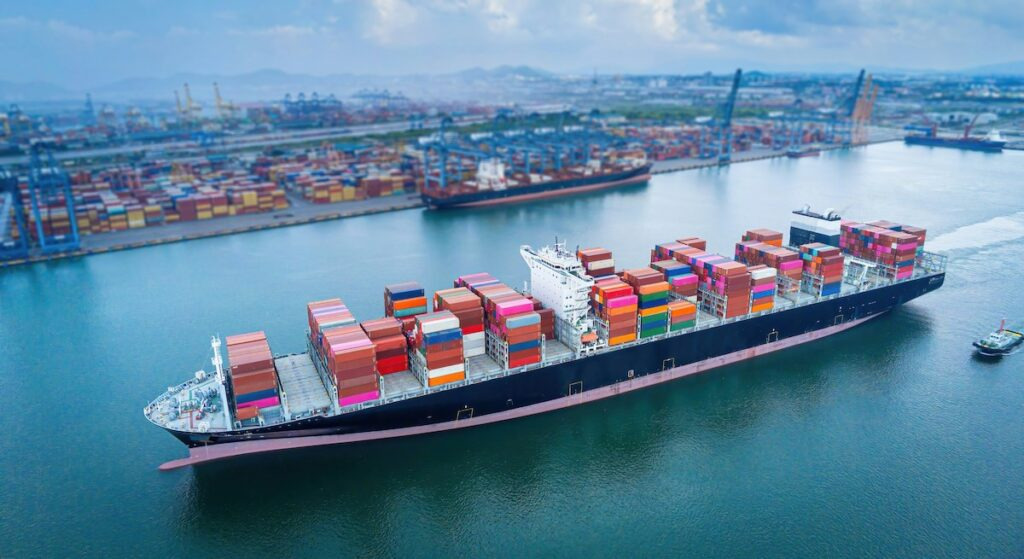
Strong receivables-based financing and white-label trade finance activity growth (2021 – 2025)
The data also shows continued strength in receivables-based financing, which accounted for 86% of total trade finance volume throughout the period, highlighting the durability of accounts receivable as the dominant structure for market growth.
At the same time, white-label trade finance activity grew from $19.6 billion in 2024 to $22.9 billion in 2025, a 16% increase that reflects rising demand from banks and platforms seeking scalable distribution models and partnerships.
Should we still expect trade finance growth in 2026?
At the end of last year, our CRO, Dominic Capolongo, said:
“In 2026, the trade finance sector and organizations that participate in it will be defined by adaptation and innovation amid economic challenges.”
“While growth may be constrained, the year will lay groundwork for a more efficient, accessible, and technologically sophisticated market — one better equipped to serve the complex, interconnected global economy of the future.”— Dominic Capolongo, LiquidX’s CRO.
Since then, the Trump administration launched a short military action against Venezuela.
Now (as of 5 March, 2026), the US and Israel launched a war against Iran, and that’s quickly pulled the entire Middle East into the conflict.
We can’t predict how long this will last.
Nor the short, mid- and long-term impact on trade finance.
We were — and the whole sector is — expecting more constrained growth, which means trade finance will evolve this year.
Trade finance opportunities in Europe
For asset managers, the opportunities are the same, but the regions where growth is expected are likely to differ.
Europe is one region where accelerated growth is more likely to occur. The continent is adapting to changing, more challenging times, and that means becoming more robust economically.
Trade finance is one avenue that asset managers, banks, and private equity can achieve outsized growth in Europe. This is for a number of reasons:
- The European Bank for Reconstruction and Development (EBRD) projects regional growth to reach 3.6% in 2026.
- “Economies across the EBRD regions are proving more adaptable in the face of persistent trade tensions than many expected,” said Beata Javorcik, the EBRD’s Chief Economist.
- Private credit is expanding into the trade finance space, filling gaps left by traditional banking, reports Trade Treasury Payments.
- The European trade finance market size reached $14.4 billion in 2025. Looking forward, IMARC Group expects the market to reach $24.bn by 2034, exhibiting a growth rate (CAGR) of 5.66% during 2026-2034.
All of these are good reasons to focus on Europe and use it as a launchpad for expanding into new markets.

Managing trade finance risk in 2026
Naturally, we have to think about risk even more closely in 2026. Sarah Murrow, President and CEO of Allianz Trade Americas, sat down with Doğa Usanmaz, Reporter at Trade Finance Global (TFG), to discuss this.
“When uncertainty increases, we typically see liquidity tightening, payment terms shortening, and credit standards becoming more stringent,” said Murrow. “This is really where trade credit insurance can play a big hand in offering relief to businesses, as well as financial institutions.”
One of the best examples of trade credit insurance acting as a remedy for tightened credit at times of uncertainty came during the COVID Pandemic.
Governments, such as the UK’s, established trade credit reinsurance schemes to aid economic recovery following the downturn triggered by the Pandemic.
In the UK government’s case, the scheme operated through reinsurance agreements between the UK government and participating insurers: the government covered around 90% of insurers’ claims losses in return for a premium and adherence to conduct rules.
“Trade credit insurance policies make risk quantifiable and transferable, which is really unique in its solution,” emphasised Murrow.
“The big concern with political risk and violence for businesses is business interruption of any sort,” explained Murrow. Pointing to the ACLED Conflict Index, “actual conflicts have remained steady over the past 12 months,” she said.
“Businesses have been operating in an environment of sustained geopolitical fragmentation, including regional conflicts, trade restrictions, and sanctions regimes,” said Murrow. “These all have direct impacts on supply chains and payments.”
How can finance partners support enhanced supply chain resilience?
“The diversification of supply chains is the necessity to optimise business performance and margins in the time of sanctions and tariffs,” said Murrow. “I think that businesses have diversification in mind as the best practice to build resilience.”
Asset managers can play a key role in this, and in doing so, create new growth opportunities for themselves and their clients.
Very soon, we will be launching our first in-depth eBook: “State of Trade Finance 2026: Past Learnings, Forward Thinking.”
Stay tuned to find out more!
Banks and asset managers: Get a demo of our comprehensive trade finance platform here